
If you’re searching for practical ways to elevate everyday cooking while exploring bold global flavors, you’re in the right place. This article is designed to help you master the essentials of international ingredients, understand smart flavor pairing techniques, and confidently create homemade fusion cuisine that feels both exciting and approachable.
Many home cooks struggle to balance creativity with consistency—wanting to experiment with new flavors without wasting time or ingredients. Here, you’ll find clear guidance on combining global food staples, adapting recipes to suit your pantry, and improving kitchen efficiency so every meal feels intentional and refined.
Our insights are grounded in deep culinary research, tested flavor combinations, and hands-on experimentation across diverse food traditions. Whether you’re refining weeknight dinners or crafting inventive dishes for special occasions, this guide will give you practical, reliable strategies to cook smarter, pair flavors better, and turn inspiration into memorable meals.
The Universal Language of Flavor: A Pairing Primer
To elevate your falotani fusion dishes with a delightful twist, consider pairing them with creative jalbitedrinks from our article on liquor recipes, which offer the perfect balance of flavors to complement your culinary creations – for more details, check out our Liquor Recipes Jalbitedrinks.
At the heart of every memorable dish are five basic tastes: sweet, sour, salty, bitter, and umami. Think of them as primary colors for your palate. Umami—often described as savory or meaty—is the depth you taste in mushrooms, aged cheese, or soy sauce. Once you understand these building blocks, you gain control. Instead of following recipes blindly, you start designing flavor (like a culinary DJ mixing tracks).
The Balancing Act
Great cooking isn’t about piling flavors on—it’s about balance. Contrasting tastes, like sweet and sour, create excitement. Complementary ones, like earthy mushrooms and umami-rich parmesan, build depth. When a dish feels “flat,” it’s usually missing one of the five. A squeeze of lemon can brighten; a pinch of salt can amplify sweetness (yes, really—food science backs this up, see Harvard T.H. Chan School of Public Health).
Mastering balance means better homemade fusion cuisine and fewer kitchen disappointments.
How Cuisines Create Harmony
- Thai: Lime (sour), fish sauce (salty/umami), palm sugar (sweet)
- Mexican: Chili (heat/bitter), lime (sour), salt, slow-cooked meats (umami)
- Italian: Tomato (sweet/acidic), basil (bitter), parmesan (umami), olive oil (fat for balance)
Once you see the pattern, you can recreate it anywhere—and that’s real kitchen freedom.
Technique Fusion: Where Method Meets Magic
Every dish, at its core, is a pairing of ingredient and technique. Ingredients are what you cook; technique is how you cook it. Change one, and you change everything. That’s where the magic slips in (quietly, like a plot twist you didn’t see coming).
For instance, consider the French-Asian method. Sous-vide—precise, low-temperature water-bath cooking—or confit, which means slow-cooking in fat, can transform pork belly or duck before a blistering wok sear. The result? Silky tenderness inside, lacquered crispness outside. Some purists argue this overcomplicates traditional recipes. Fair point. Yet precision techniques often reduce moisture loss and improve texture consistency (see Baldwin, Sous-Vide for the Home Cook), which is hard to ignore.
Meanwhile, the Italian-Japanese approach plays with texture. Tempura—an airy batter designed for delicate frying—wraps zucchini blossoms or sage leaves in a shatteringly crisp shell. Dip them into a balsamic reduction and suddenly Venice meets Kyoto. Skeptics might call it gimmicky. But contrast—crispy and syrupy, herbal and sweet—is a cornerstone of flavor science (McGee, On Food and Cooking).
Then there’s the Latin-Indian crossover. Tandoori-style roasting uses extreme heat to char meats marinated in aji amarillo or adobo. The clay-oven effect intensifies spice while sealing in juices. Pro tip: high heat plus yogurt-based marinades enhances browning through lactic acid tenderization.
Looking ahead, it’s reasonable to speculate that technique-driven homemade fusion cuisine will define future dining trends. As global access expands, cooks may swap methods as freely as playlists—less about borders, more about bold, delicious possibility.
Three Fusion Frameworks to Ignite Your Creativity
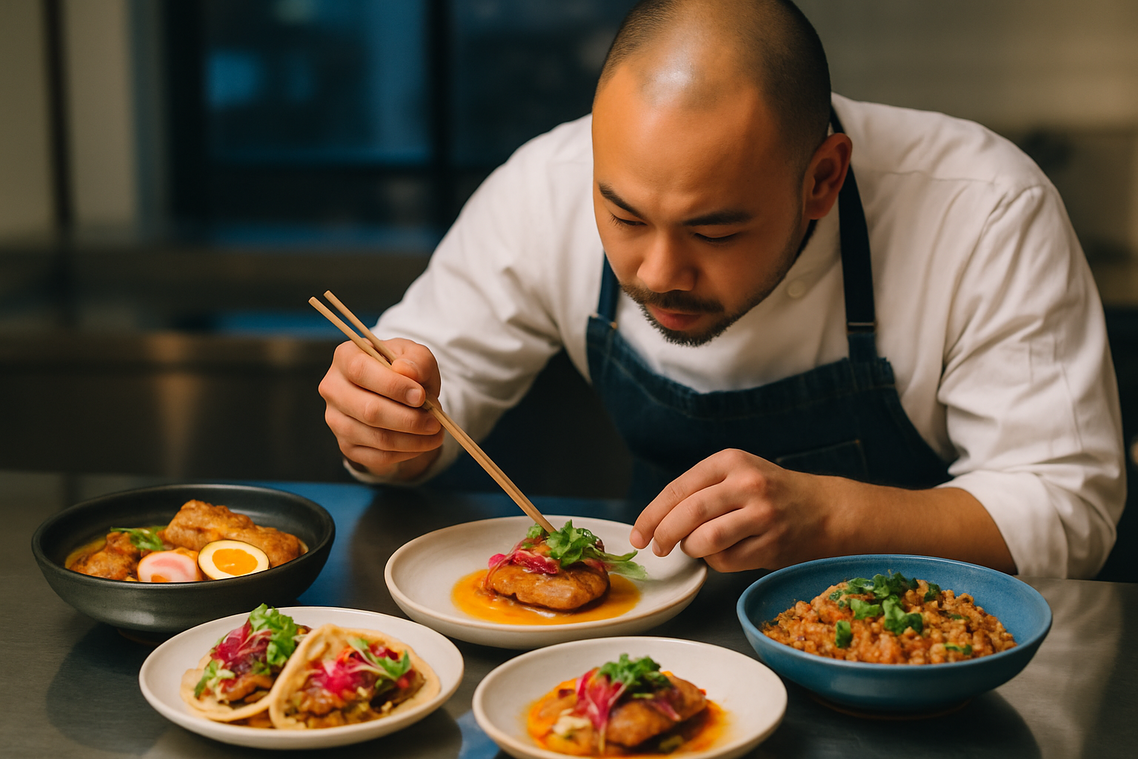
Have you ever wondered what would happen if two culinary traditions stopped competing and started collaborating? Fusion cooking isn’t about chaos—it’s about frameworks. A framework, in this context, is a repeatable structure for blending flavors from different cultures in a way that feels intentional (not like a fridge clean‑out experiment gone rogue).
1. Scandi‑Mex Salmon Tostadas
Start with contrast. Crisp meets silky. Bright meets briny.
- Gravlax-style cured salmon (a Scandinavian technique using salt, sugar, and dill to cure fish)
- Crunchy corn tostadas
- Dill‑caper crema
- Quick‑pickled red onions
The tostada delivers that shattering bite, while the cured salmon melts on contact. The crema ties it together with tang and herbs. Is it Nordic? Is it Mexican? Or is it simply balanced? (Sometimes the label matters less than the flavor.)
2. Indo‑Italian Gnocchi
Why limit gnocchi to tomato or pesto? Pillowy potato dumplings—gnocchi—are perfect vehicles for bold sauces. Imagine them bathed in a creamy, butter chicken‑style sauce infused with garam masala, ginger, and garlic.
Finished with cilantro and basil, this dish bridges comfort and spice. Some purists might argue Italian pasta shouldn’t swim in Indian gravy. Fair point. But Italian cuisine has long embraced adaptation (tomatoes weren’t even native to Italy originally—Smithsonian Magazine). So why stop evolving now?
3. Greco‑Thai Lamb Skewers
Greek yogurt, lemon, and oregano form the base marinade. Now add lemongrass and galangal—Thai aromatics that bring citrusy sharpness and peppery warmth. Grill, then serve with a coconut‑feta dipping sauce.
Unexpected? Absolutely. Unforgettable? Even more so.
If you’re exploring homemade fusion cuisine, understanding foundational flavor pairings is essential. Dive deeper into the key ingredients that define falotani fusion cuisine to refine your combinations.
So here’s the real question: what two cuisines in your kitchen are just waiting to meet?
Your Fusion-Ready Kitchen: Tips for Adaptation and Efficiency
Start with what you know. Take roasted chicken or simple pasta and add one new element: miso butter, chili garlic sauce, or lime zest. That’s fusion—blending culinary traditions into one dish (think tacos meeting teriyaki).
The Global Pantry Corner
Stock versatile “bridge” ingredients—items that cross cuisines easily.
| Ingredient | Why It Works |
|---|---|
| Soy sauce | Salty depth (umami) |
| Olive oil | Universal richness |
| Coconut milk | Creamy balance |
| Limes | Bright acidity |
Taste as you go. homemade fusion cuisine succeeds through small adjustments, not guesswork.
Bring Global Flavor Into Your Kitchen Today
You came here looking for practical ways to elevate your cooking with global food essentials, smarter flavor pairings, and creative fusion ideas. Now you have the tools to turn everyday ingredients into something memorable.
Struggling with repetitive meals or flavors that fall flat can make cooking feel like a chore. But with the right combinations and a few kitchen-efficiency tweaks, you can transform ordinary dishes into standout plates of homemade fusion cuisine that excite everyone at the table.
The next step is simple: start experimenting. Choose one new flavor pairing this week. Adapt a favorite recipe using a global twist. Apply one efficiency tip to streamline your prep time.
If you want proven techniques, curated pairing ideas, and step-by-step inspiration trusted by thousands of passionate home cooks, explore our latest guides and recipes now. Don’t settle for bland or predictable—unlock bold, balanced flavors in your kitchen today.
 Kitchen Efficiency & Innovation Specialist
Graham Royalimores is the kind of writer who genuinely cannot publish something without checking it twice. Maybe three times. They came to culinary pulse through years of hands-on work rather than theory, which means the things they writes about — Culinary Pulse, Falotani Fusion Dishes, Flavor Pairing Techniques, among other areas — are things they has actually tested, questioned, and revised opinions on more than once.
That shows in the work. Graham's pieces tend to go a level deeper than most. Not in a way that becomes unreadable, but in a way that makes you realize you'd been missing something important. They has a habit of finding the detail that everybody else glosses over and making it the center of the story — which sounds simple, but takes a rare combination of curiosity and patience to pull off consistently. The writing never feels rushed. It feels like someone who sat with the subject long enough to actually understand it.
Outside of specific topics, what Graham cares about most is whether the reader walks away with something useful. Not impressed. Not entertained. Useful. That's a harder bar to clear than it sounds, and they clears it more often than not — which is why readers tend to remember Graham's articles long after they've forgotten the headline.
Kitchen Efficiency & Innovation Specialist
Graham Royalimores is the kind of writer who genuinely cannot publish something without checking it twice. Maybe three times. They came to culinary pulse through years of hands-on work rather than theory, which means the things they writes about — Culinary Pulse, Falotani Fusion Dishes, Flavor Pairing Techniques, among other areas — are things they has actually tested, questioned, and revised opinions on more than once.
That shows in the work. Graham's pieces tend to go a level deeper than most. Not in a way that becomes unreadable, but in a way that makes you realize you'd been missing something important. They has a habit of finding the detail that everybody else glosses over and making it the center of the story — which sounds simple, but takes a rare combination of curiosity and patience to pull off consistently. The writing never feels rushed. It feels like someone who sat with the subject long enough to actually understand it.
Outside of specific topics, what Graham cares about most is whether the reader walks away with something useful. Not impressed. Not entertained. Useful. That's a harder bar to clear than it sounds, and they clears it more often than not — which is why readers tend to remember Graham's articles long after they've forgotten the headline.