If you’re looking to expand your cooking with richer flavors, better nutrition, and smarter kitchen techniques, this guide is designed for you. Exploring global grains and legumes opens the door to more versatile meals, balanced nutrition, and creative flavor pairings that go far beyond everyday staples. Many home cooks want to diversify their dishes but aren’t sure which ingredients to choose, how to combine them, or how to adapt recipes without sacrificing taste or texture.
This article breaks down essential ingredients from around the world, shows you how to pair them effectively, and shares practical tips to improve efficiency in your kitchen. You’ll also learn how to adapt traditional recipes into exciting fusion dishes while maintaining authenticity and balance.
Our insights are grounded in extensive culinary research, hands-on recipe testing, and a deep understanding of flavor structure and ingredient functionality—so you can cook with confidence and creativity.
Unlocking the World’s Pantry: A Guide to Grains and Legumes
Your pantry doesn’t have to revolve around rice and pasta. Instead, explore global grains and legumes to transform everyday meals. For example, swap white rice for nutty freekeh in Middle Eastern pilafs, or try French lentils in salads (they hold their shape beautifully).
Region-by-Region Picks
| Region | Grain/Legume | Best Use |
|---|---|---|
| South Asia | Red lentils |
Quick dals, soups |
| West Africa | Fonio | Light porridge, couscous-style sides |
| Latin America | Black beans | Tacos, stews |
Start small: replace one weekly staple. Pro tip: toast grains before simmering for deeper flavor.
The Americas: Ancient Staples Reimagined
Quinoa & Amaranth
First, let’s clarify a term: pseudo-cereals are seeds that cook and eat like grains but aren’t technically grasses. Quinoa and amaranth, cultivated in the Andes for over 5,000 years, fall into this category. What makes them stand out isn’t just their nutty flavor or fluffy texture—it’s their nutrition. Both are considered complete proteins, meaning they contain all nine essential amino acids. That’s rare in plant foods (Harvard T.H. Chan School of Public Health).
Quinoa fluffs like rice but carries a subtle crunch, making it ideal for salads, grain bowls, or as a rice substitute. Meanwhile, amaranth cooks softer and slightly sticky. Some critics argue these ancient staples are “overhyped health trends.” Yet global production has steadily increased since 2013, reflecting sustained demand rather than a passing fad (FAO data). In practice, their versatility speaks for itself.
Black Beans & Pinto Beans
Equally foundational, black and pinto beans anchor Latin American cuisine. Their creamy texture and earthy depth enrich soups, stews, and classics like gallo pinto. Beyond flavor, legumes are linked to improved heart health and reduced LDL cholesterol (American Heart Association). Skeptics may say beans are too humble to innovate—but try building a fusion burger around mashed black beans and spices (you’ll see the point).
Flavor Pairing & Fusion Ideas
For modern twists on global grains and legumes, pair quinoa with avocado, lime, and cilantro. Or simmer amaranth into porridge with cinnamon and berries for a breakfast upgrade. Pro tip: toast quinoa briefly before boiling to deepen its nuttiness.
Asia: The Heart of Aromatic Rices and Hearty Lentils
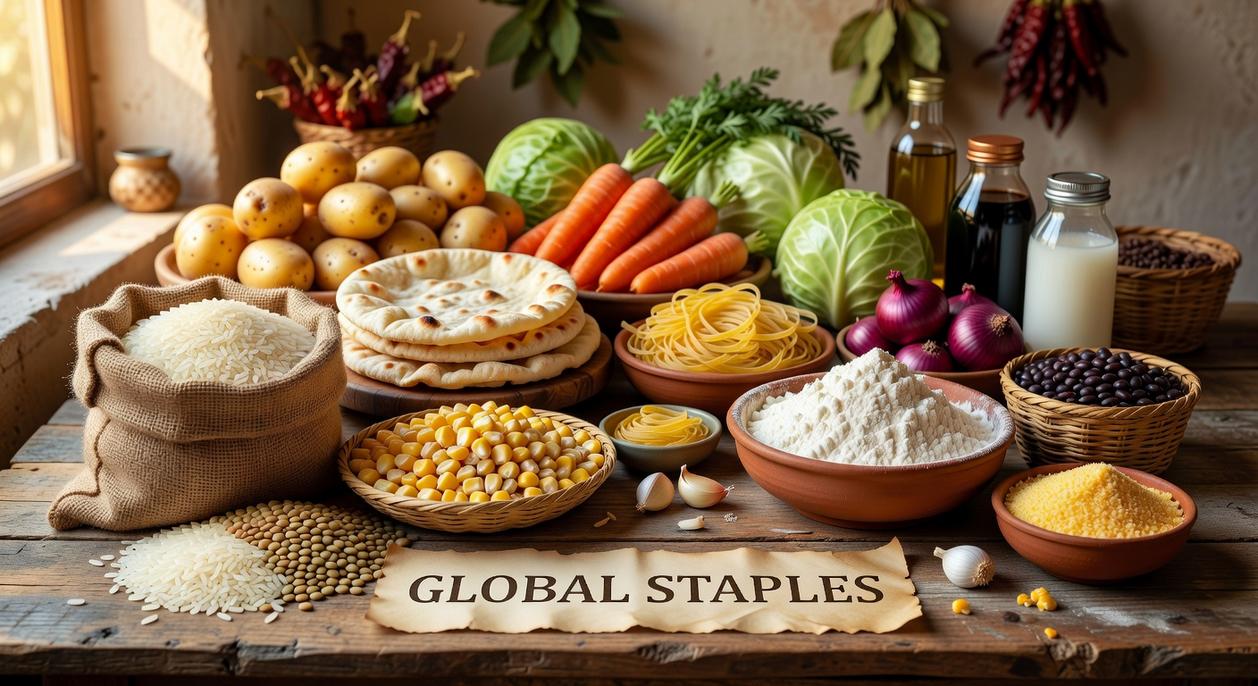
Asia’s culinary backbone rests on two pillars: fragrant rice and protein-rich legumes. If you’re stocking your pantry wisely, start here.
Jasmine vs. Basmati: Choose With Intention
Jasmine rice, primarily grown in Thailand, is a long-grain variety known for its floral aroma and soft, slightly sticky texture when cooked. That gentle cling makes it ideal for Southeast Asian dishes like Thai green curry or Vietnamese grilled pork bowls (it happily soaks up sauce).
Basmati rice, by contrast, is prized in Indian and Persian cuisine for its firm, separate grains and nutty fragrance. When cooked properly, each grain stays distinct—perfect for biryani or pilaf. Some argue rice is interchangeable, but texture shapes the entire dish. Choose jasmine for comfort and cohesion; choose basmati when structure matters.
Lentils (Dal) & Chickpeas (Chana): Everyday Powerhouses
Red lentils break down quickly, creating creamy dals. Brown and green lentils hold their shape, making them excellent for stews and salads. Meanwhile, chickpeas offer remarkable versatility—from chana masala to crunchy roasted snacks.
For efficiency, cook a large batch of dried chickpeas once a week. Use them for hummus, toss into salads, or roast with spices (future you will be grateful).
Flavor Pairing & Smart Fusion
Infuse basmati with saffron and cardamom for depth. Pair lentils with coconut milk and turmeric for richness and warmth. These global grains and legumes prove how simple staples elevate everyday cooking—especially when you understand how global food essentials enhance everyday meals: https://falotani.net/how-global-food-essentials-enhance-everyday-meals/.
Start simple, then experiment boldly.
Africa & The Middle East: Earthy, Ancient Grains
Have you ever wondered why some of the world’s oldest grains are suddenly appearing on modern menus? Across Africa and the Middle East, tiny powerhouses like teff and fonio have been nourishing communities for centuries—and they’re finally getting their spotlight.
Teff, a minuscule Ethiopian grain, has a deep, molasses-like flavor and a soft texture when cooked. It’s the foundation of injera, the spongy flatbread that doubles as a utensil (efficient and delicious). Fonio, meanwhile, cooks in minutes and fluffs up like couscous, with a light, slightly nutty taste. Looking for something gluten-free yet satisfying? Fonio might be your new weeknight hero.
Then there’s freekeh and fava beans—bold, comforting staples. Freekeh is made from green wheat that’s harvested young, roasted, then rubbed to remove the charred husk. The result? A smoky, chewy grain with serious depth. Fava beans, beloved from Egypt to the Levant, bring a robust, nutty flavor that anchors countless dishes.
So how can you use them?
- Toss freekeh with pomegranate and mint for a bright, textured pilaf.
- Blend fava beans with lemon and garlic for ful medames, a velvety, protein-rich dip.
- Swap bulgur for smoky freekeh in tabbouleh for a deeper twist.
Curious about upgrading your pantry with global grains and legumes? Sometimes, the oldest ingredients create the freshest ideas.
Europe: Rustic Grains and Old-World Legumes
Farro and spelt are ancient wheat varieties—meaning they’ve been cultivated for thousands of years, long before modern refined flour took over. Farro, popular in Italy, is chewy and nutty, often used in rustic soups, hearty salads, or cooked risotto-style as farrotto (same method, sturdier bite). Spelt, favored in Germany, has a slightly sweet, earthy flavor and works beautifully in breads and porridges.
Lupini beans are firm, brined Mediterranean snacks (you peel the skin before eating—yes, really). Flageolet beans, small and pale green, are tender and creamy, prized in French cuisine.
Pair farro with mushrooms, parmesan, and thyme. Serve flageolets with roasted lamb and rosemary. These global grains and legumes make tradition taste refreshingly modern.
Your kitchen can travel farther than any passport. With global grains and legumes lining your shelves, the air shifts—nutty quinoa steaming like earth after rain, lentils simmering with a peppery whisper, farro releasing a toasty aroma that clings to the spoon.
• Hear the pop of amaranth in a hot pan.
• Feel the creamy bite of chickpeas folded into olive oil and lemon.
Understanding each ingredient’s flavor profile—its sweetness, bitterness, texture—turns repetition into adventure. One simple bowl can taste like a marketplace at dusk. Choose one staple this week and cook it simply. Toast it. Salt it. Taste it.
Bring Global Flavor Into Your Kitchen Today
You came here looking for practical, inspiring ways to work with global grains and legumes—and now you have the tools to do exactly that. From smart flavor pairings to fusion ideas and efficient kitchen techniques, you’re equipped to turn everyday staples into memorable meals.
The real frustration isn’t a lack of ingredients—it’s running out of ideas, cooking the same dishes on repeat, or feeling unsure how to adapt recipes with confidence. That stops here.
Start by choosing one new grain or legume this week. Pair it with bold spices, test a fusion twist, and use the efficiency tips you’ve learned to simplify the process. Small changes in your pantry can create big shifts in flavor.
If you’re ready to stop guessing and start cooking with purpose, explore more of our expert-backed guides and recipe adaptations trusted by thousands of passionate home cooks. Dive in now and transform your everyday meals into globally inspired dishes.
 Culinary Content Strategist
Heather Woodstingser is the kind of writer who genuinely cannot publish something without checking it twice. Maybe three times. They came to culinary pulse through years of hands-on work rather than theory, which means the things they writes about — Culinary Pulse, Falotani Fusion Dishes, Flavor Pairing Techniques, among other areas — are things they has actually tested, questioned, and revised opinions on more than once.
That shows in the work. Heather's pieces tend to go a level deeper than most. Not in a way that becomes unreadable, but in a way that makes you realize you'd been missing something important. They has a habit of finding the detail that everybody else glosses over and making it the center of the story — which sounds simple, but takes a rare combination of curiosity and patience to pull off consistently. The writing never feels rushed. It feels like someone who sat with the subject long enough to actually understand it.
Outside of specific topics, what Heather cares about most is whether the reader walks away with something useful. Not impressed. Not entertained. Useful. That's a harder bar to clear than it sounds, and they clears it more often than not — which is why readers tend to remember Heather's articles long after they've forgotten the headline.
Culinary Content Strategist
Heather Woodstingser is the kind of writer who genuinely cannot publish something without checking it twice. Maybe three times. They came to culinary pulse through years of hands-on work rather than theory, which means the things they writes about — Culinary Pulse, Falotani Fusion Dishes, Flavor Pairing Techniques, among other areas — are things they has actually tested, questioned, and revised opinions on more than once.
That shows in the work. Heather's pieces tend to go a level deeper than most. Not in a way that becomes unreadable, but in a way that makes you realize you'd been missing something important. They has a habit of finding the detail that everybody else glosses over and making it the center of the story — which sounds simple, but takes a rare combination of curiosity and patience to pull off consistently. The writing never feels rushed. It feels like someone who sat with the subject long enough to actually understand it.
Outside of specific topics, what Heather cares about most is whether the reader walks away with something useful. Not impressed. Not entertained. Useful. That's a harder bar to clear than it sounds, and they clears it more often than not — which is why readers tend to remember Heather's articles long after they've forgotten the headline.