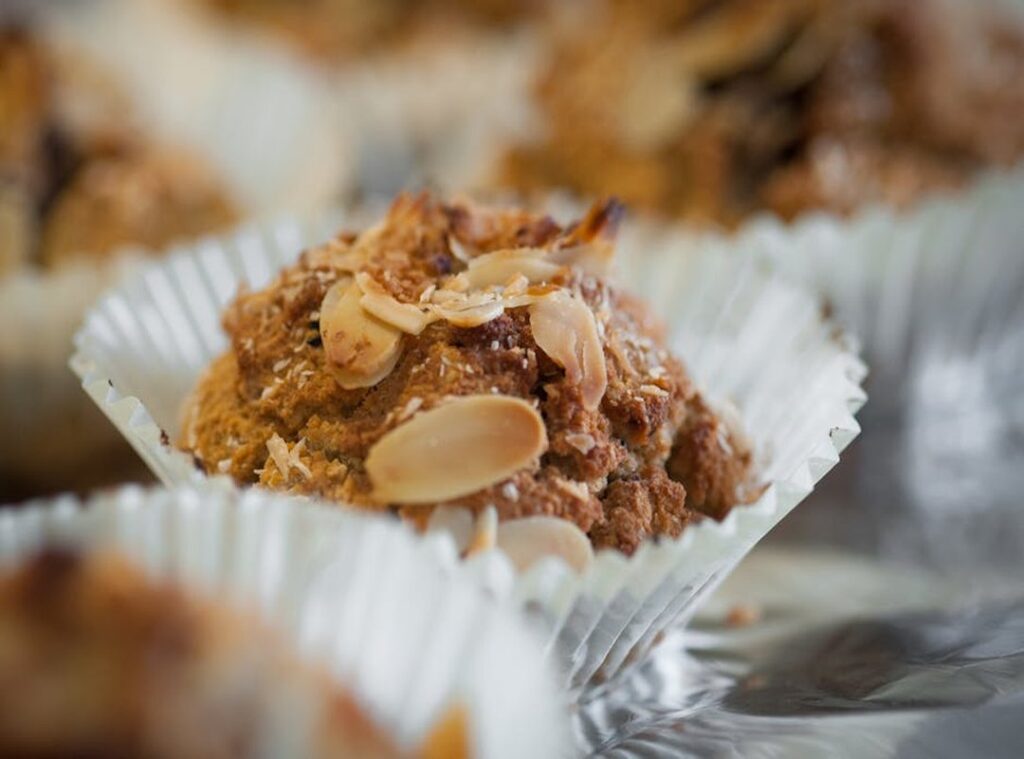
Craving a treat that doesn’t sideline your health goals? Gluten-free muffins might be your answer. Let’s face it, the gluten-free craze isn’t just a flash in the pan. People everywhere are ditching gluten for better digestion or just to feel good.
But here’s the catch: finding a muffin that doesn’t taste like cardboard is tough. Ever bitten into one and thought, “Where’s the flavor?” You’re not alone.
I get it; it’s frustrating. But fear not. This article dives into the world of gluten-free baking and why these muffins are worth your time.
We’ll explore what makes a muffin truly scrumptious without the gluten, where to find these gems, and how to whip them up yourself.
Why trust this? We’ve gathered takeaways from top chefs and bakers. You’ll learn not just the what’s but the why’s and how’s.
So stick around. Your taste buds will thank you.
Flour Power: Mastering Gluten-Free Baking
The secret to nailing gluten-free baking isn’t about finding the perfect flour. It’s about blending them. Sounds simple, right?
But trust me, this is the most key step. You can’t just grab one type and expect magic. For structure, an all-purpose gluten-free blend is your best friend.
Think brown rice, potato starch, and tapioca flour. They give your treats the backbone they need.
Now, for moisture and tenderness, nut or seed flours are key. Almond or oat flour can work wonders. Ever tried gluten-free muffins that weren’t dry as cardboard?
Thank these flours. But you can’t stop there. A binder like xanthan gum or psyllium husk is non-negotiable.
These mimic gluten’s elasticity, preventing that dreaded crumbly texture. Without them, you might as well be baking sandcastles.
Want a simple, go-to ratio for your DIY flour blend? Start with two parts all-purpose gluten-free blend, one part nut or seed flour, and a bit of binder. This empowers you to ditch those pre-made mixes.
Try it, experiment, and tweak to your taste.
For a twist, consider adding chickpea or sorghum flour. They bring a subtle, complex flavor note that can raise your recipes. It’s like unlocking advanced culinary techniques without leaving your kitchen.
Oh, and if you’re into converting traditional dishes low carb, check out this resource. It’s a neat way to expand your gluten-free repertoire. So grab those flours and get mixing.
Your taste buds will thank you.
Muffin Magic: Unlocking Gluten-Free Deliciousness
You want the perfect gluten-free muffins? Trust me, I’ve got the master recipe. Start with gathering your ingredients: 1 1/2 cups (210g) of gluten-free flour, 1/2 cup (100g) sugar, 1 1/2 teaspoons baking powder, and 1/4 teaspoon salt.
These dry ingredients are the backbone. Add 1/2 cup (120ml) milk, 1/3 cup (80ml) oil, and 1 teaspoon vanilla extract to a separate bowl. Oh, and don’t forget the egg (or substitute if you’re vegan) to the wet team.
Here’s where the magic happens. The muffin method isn’t just a fancy term. It’s key for texture.
Mix your dry ingredients in one bowl and your wet ones in another. Combine them gently. I mean it. Don’t overmix.
Tough muffins are a tragedy.
A pro tip: let the batter rest. Give it 20-30 minutes. Why?
This allows the flours to hydrate properly, resulting in a better rise and softer crumb. Trust me, patience pays off here.
Now, preheat your oven to 400°F. This initial high temperature is key. It gives your muffins a solid oven spring, creating those glorious domed tops.
After the first 5-7 minutes, reduce the temperature to 350°F and bake until done. How do you know they’re done? The toothpick test.
Insert it into the center of a muffin. If it comes out clean, they’re ready.
Once out of the oven, let them cool in the pan for a few minutes. But don’t wait too long. Transfer them to a wire rack to finish cooling.
This prevents sogginess.
If you’re skeptical about gluten-free baking, this recipe will convert you. It’s not just me saying it. The world of gluten-free muffins is full of skeptics turned believers.
So, what’s next for you? Experiment. Add blueberries or chocolate chips to the batter.
Make it your own. Baking shouldn’t be a one-size-fits-all. The future of your baking adventures starts here.
Ready to dive in? Your kitchen is calling.
From Simple to Sublime: Creative Flavor Pairings
You’re in the kitchen, staring at that bag of gluten-free muffin mix. I get it. You want something memorable, not the same old chocolate chip routine.

Let’s shake things up.
First up, a bright and aromatic twist: Lemon & Cardamom. Start by adding lemon zest and ground cardamom to your dry ingredients. Just a pinch of cardamom will do.
Trust me, it’s potent. For the topping, whip up a simple lemon glaze. Mix powdered sugar with lemon juice until smooth and drizzle over cooled muffins.
It’s like a sunny day in your mouth.
Now, if you’re craving something rich and fruity, try Raspberry & White Chocolate. Use frozen raspberries (do not thaw them). They hold their shape better and won’t bleed.
Toss in white chocolate chunks too. They add a sweet creaminess that pairs beautifully with the tart berries. The trick is to fold them in gently to avoid smashing the berries.
Feeling adventurous? Go for the warm and spicy combo: Pear & Crystallized Ginger. Dice up a ripe pear (make sure it’s ripe) and chop some crystallized ginger.
Fold them into the batter and top with a cinnamon-sugar streusel. The crunch of the streusel against the soft muffin is irresistible.
And hey, if you’re looking to adapting classic recipes vegan diets, these pairings can be your new playground. Who said gluten-free muffins have to be boring? These flavor profiles are anything but.
Go ahead, indulge yourself.
Muffin Troubleshooting: Your Go-To Guide
Let’s face it, gluten-free muffins can be tricky. They have this infuriating tendency to turn out dry and crumbly. Sound familiar?
The solution: tweak your liquid-to-flour ratio. You need a flour with fat content. Almond flour works great.
Add moisture with sour cream, Greek yogurt, or mashed banana. Be careful not to overbake. Seriously, just don’t.
Got dense, gummy muffins? That’s usually due to overmixing. It’s tempting to keep stirring, but stop when things just come together.
Also, check your binder. Using too much xanthan gum? That’s probably messing things up.
What about flat muffins? First, check your baking powder or soda. Is it fresh?
If not, chuck it. Now, let’s talk about baking technique. Start with a high temperature, then lower it.
This helps your muffins rise beautifully. For that perfect dome, let the batter rest before baking.
These little tweaks can make a world of difference. Baking gluten-free muffins isn’t sorcery, just chemistry. And practice. (Lots of it.) Remember, the key to fluffy, delicious muffins is in these details.
Baking should be fun, not a nightmare. So go on, get in the kitchen and show those muffins who’s boss.
Ready, Set, Bake!
Finding truly delicious gluten-free muffins often feels like seeking a needle in a haystack. But you, my friend, now hold the key. You know the right flour blends.
You’ve mastered the key techniques. You can unleash your creativity with flavors. This isn’t just about following recipes but understanding the science behind it.
So why settle for bland imitations when you can bake something phenomenal? Pick a flavor that excites you, preheat that oven, and dive in. You won’t regret it.
These muffins are your game-changer. Ready to make your kitchen smell amazing? Get baking now.
You’re all set.
 Founder & Culinary Visionary
Zyvaris Dolthane has opinions about kitchen efficiency tips. Informed ones, backed by real experience — but opinions nonetheless, and they doesn't try to disguise them as neutral observation. They thinks a lot of what gets written about Kitchen Efficiency Tips, Flavor Pairing Techniques, Recipe Adaptation Ideas is either too cautious to be useful or too confident to be credible, and they's work tends to sit deliberately in the space between those two failure modes.
Reading Zyvaris's pieces, you get the sense of someone who has thought about this stuff seriously and arrived at actual conclusions — not just collected a range of perspectives and declined to pick one. That can be uncomfortable when they lands on something you disagree with. It's also why the writing is worth engaging with. Zyvaris isn't interested in telling people what they want to hear. They is interested in telling them what they actually thinks, with enough reasoning behind it that you can push back if you want to. That kind of intellectual honesty is rarer than it should be.
What Zyvaris is best at is the moment when a familiar topic reveals something unexpected — when the conventional wisdom turns out to be slightly off, or when a small shift in framing changes everything. They finds those moments consistently, which is why they's work tends to generate real discussion rather than just passive agreement.
Founder & Culinary Visionary
Zyvaris Dolthane has opinions about kitchen efficiency tips. Informed ones, backed by real experience — but opinions nonetheless, and they doesn't try to disguise them as neutral observation. They thinks a lot of what gets written about Kitchen Efficiency Tips, Flavor Pairing Techniques, Recipe Adaptation Ideas is either too cautious to be useful or too confident to be credible, and they's work tends to sit deliberately in the space between those two failure modes.
Reading Zyvaris's pieces, you get the sense of someone who has thought about this stuff seriously and arrived at actual conclusions — not just collected a range of perspectives and declined to pick one. That can be uncomfortable when they lands on something you disagree with. It's also why the writing is worth engaging with. Zyvaris isn't interested in telling people what they want to hear. They is interested in telling them what they actually thinks, with enough reasoning behind it that you can push back if you want to. That kind of intellectual honesty is rarer than it should be.
What Zyvaris is best at is the moment when a familiar topic reveals something unexpected — when the conventional wisdom turns out to be slightly off, or when a small shift in framing changes everything. They finds those moments consistently, which is why they's work tends to generate real discussion rather than just passive agreement.