Ever found yourself in the kitchen wondering why your dish isn’t turning out quite right? Sometimes it’s all about how you adjust heat in recipes. I know, sounds simple, right?
But it makes a world of difference. Think about it.
The right heat can transform a dish from bland to brilliant. Too much heat and you might burn it. Too little and it’s undercooked.
Finding that sweet spot is key. You might be asking, “How do I know what temperature to use?” That’s what I’m here for.
I’ve spent years experimenting with flavors and techniques, digging into the science of it all. You can trust this guide because I’ve burned things so you don’t have to (literally). This isn’t about following a recipe to the letter; it’s about understanding the why behind it.
By the end, you’ll know how to tweak temperatures like a pro. Dive in, and let’s turn up the heat (just) right.
Why Your Oven Isn’t Your Friend
Let’s talk about ovens. They have a mind of their own. Ever notice how a recipe can fail you, even when you follow it to the letter?
Yeah, that’s because your oven’s a diva. Most home ovens are inaccurate. They have hot spots and are often off by 25 to 50 degrees.
Want a quick fix? Get a cheap oven thermometer. It’s a game changer.
Adjust heat in recipes based on what this little gadget tells you.
Now, let’s get to pans. Not all pans are created equal (surprise, surprise).
- Glass/Ceramic: These heat slower but hold heat longer. You might want to drop your temp by 25 degrees.
- Dark Metal: This is like a solar panel, absorbing more heat and browning faster. Lower the temp or risk a burnt bottom.
- Light/Shiny Metal: Reflects heat, causing a slower, even browning. Good for those who like their cookies just right.
Altitude? Don’t even get me started. High altitude means you need to adjust your cooking temps.
Water boils at a lower temp up there. Simple rule: increase your baking temp by 15-25 degrees.
And let’s not forget about ingredients. Cold ingredients from the fridge can mess with your cook time. They might need a slight temperature tweak.
Room temp is usually better for baking.
Want to make gluten free muffins? Keep these tips in mind. Your oven and ingredients may need some coaxing.
Recipes are just a starting point. Adjust, test, and taste until it’s perfect.
Adjusting Cooking Temps: A Real Guide
Changing the temperature in cooking isn’t just a guessing game. It’s a skill. A skill that can make or break your dish.
Let’s start with your oven. Say it runs hot or cold. You’ve done the thermometer test (always do this test), and it’s 25°F too hot.
Easy fix: just set the dial 25°F lower than the recipe says. Simple, right? You won’t believe how much that changes things.
Next, cookware swaps. Moving from metal to glass or ceramic? Lower the temp by 25°F.
Trust me, you’ll thank me later. Keep the cooking time the same to start, but check for doneness early. The last thing you want is a burnt lasagna because you didn’t adjust.
Now, what about going from light to dark metal? Lower the temp by 15-25°F or peek in 10-15% sooner than usual. Dark pans absorb more heat.
They act like they’re on a mission to speed things up. Don’t let them catch you off guard.
Ever used a cast iron skillet? You should. It holds heat intensely.
For baking, like cornbread, you might keep the temp, but you’ll need to cut down the time. Don’t overdo it or you’ll end up with a brick instead of a loaf.
Let’s talk texture. Chasing crispy roasts or veggies? Start with a high heat blast at 425-450°F for 15-20 minutes to get that golden color.
Then, bring it down to the recipe’s suggestion (say, 350°F) to finish cooking through. This method never fails to impress.
Or maybe you want softer bakes like cakes or casseroles. If dry edges and gooey centers are your nemeses, try lowering the temp by 25°F and extending the bake time. This can make all the difference.
Learning to adjust heat in recipes is about knowing your tools and trusting your instincts. It’s about being a little bold and a little cautious all at once. And honestly, it’s the kind of thing that separates decent cooks from great ones.
So why not experiment a bit? Your oven’s quirks and your cookware’s quirks don’t have to be your enemy. They can be your secret weapon.
Temperature vs. Time: The Cooking Balancing Act
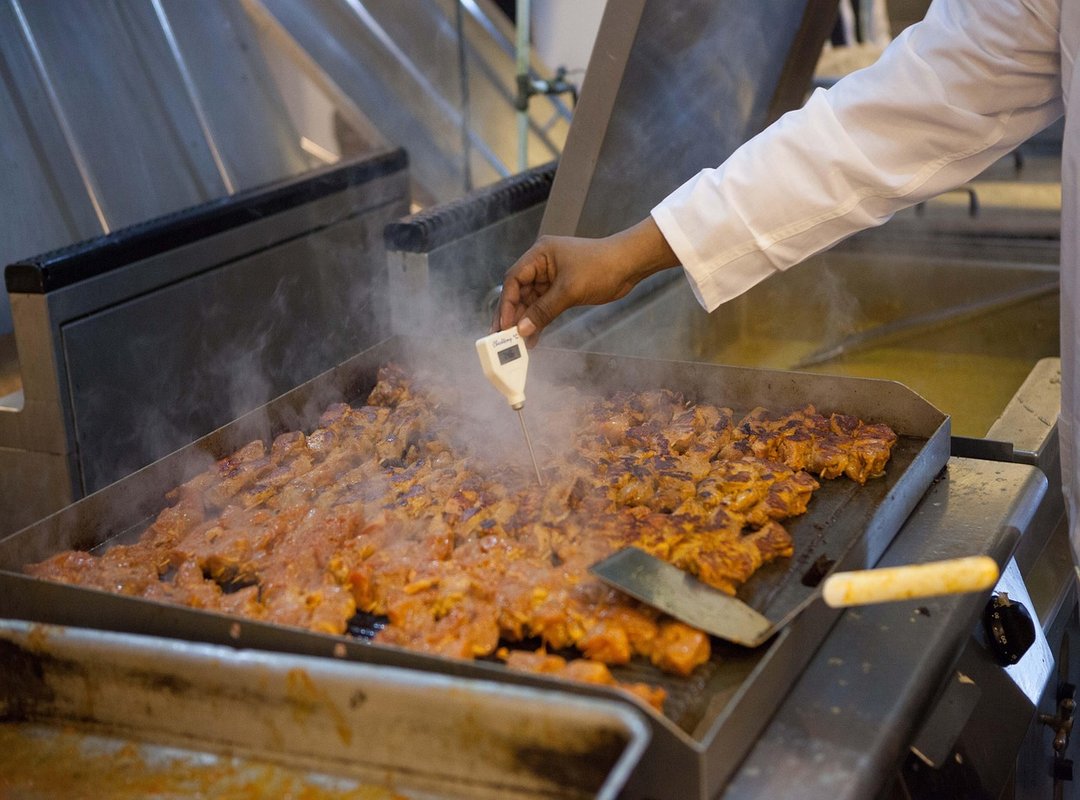
Let’s get real about cooking: it’s a dance between temperature and time. You can’t just adjust heat in recipes without considering the clock. When the temperature drops, extend the cooking time.
Raise the heat? Shorten it. It’s a simple inverse rule.
Yet, many miss this and end up with half-baked or overcooked disasters.
Now, here’s a practical tip. Adjust the cooking time by about 15-25% for every 25-degree change. It’s a ballpark figure, sure.
But remember, it’s just a guess! Your eyes and nose are the true guides. Forget the timer.
Does it smell right? Does it look golden and crispy? Trust these cues over a rigid schedule.
Tools matter too. Use an instant-read thermometer for meats. It’s the only way to know if your steak is perfectly medium-rare.
For baked goods, the toothpick test is unbeatable. Stick it in, pull it out. If it comes out clean, you’re golden.
These tools are the ultimate truth-tellers in the kitchen.
Want to explore how to make your traditional dishes healthier? Check out converting traditional dishes low carb for some fresh ideas. It’s a game-changer if you’re looking to maintain flavor without all the carbs.
Cooking isn’t about strict rules. It’s about feeling the rhythm of the ingredients. Next time you’re in the kitchen, think about this balance.
Adjust, adapt, and taste. It’s more art than science. And that’s the beauty of it.
Trust yourself. You got this.
Modern Kitchen Adjustments: Convection Ovens & Air Fryers
Convection ovens are like magic in the kitchen. Why? They cook faster because of that fan whirling hot air around.
You know, like a mini hurricane of heat in there. To adjust recipes, the two standard conversion rules are your friends. Rule 1: drop the temperature by 25°F and stick with the original time.
Rule 2: keep that temp steady but cut the time by 25%. Check your oven’s manual (seriously, who even reads those?) but start with Rule 1. It’s the most common.
Air fryers are just small, solid convection ovens. No kidding! So when you’re adapting recipes for an air fryer, crank up the temperature by 25-50°F.
And cut the cooking time drastically (by) 50% or more. Trust me, you’ll need to keep an eye on things. The first time I tried, I burnt my fries.
Lesson learned: check often!
When you adjust heat in recipes, it’s not just about following rules. It’s about knowing your gear. And okay, maybe a bit of trial and error.
You didn’t think you’d nail those falotani fusion dishes on the first try, did you? Cooking is about experimenting (and) sometimes burning a few things in the process.
Cook Like You Mean It
Ever felt let down by a recipe? I get it. We’ve all been there.
Here’s the fix: learn to adjust heat in recipes. Know why you’re doing it, and suddenly, you’re the one in charge. It’s not just about following steps; it’s about taking control.
Want proof? Pick a favorite recipe. Drop the temp by 25°F next time you use a glass dish.
See how it transforms your cooking. Ready to experiment? Dive in today.
 Culinary Content Strategist
Heather Woodstingser is the kind of writer who genuinely cannot publish something without checking it twice. Maybe three times. They came to culinary pulse through years of hands-on work rather than theory, which means the things they writes about — Culinary Pulse, Falotani Fusion Dishes, Flavor Pairing Techniques, among other areas — are things they has actually tested, questioned, and revised opinions on more than once.
That shows in the work. Heather's pieces tend to go a level deeper than most. Not in a way that becomes unreadable, but in a way that makes you realize you'd been missing something important. They has a habit of finding the detail that everybody else glosses over and making it the center of the story — which sounds simple, but takes a rare combination of curiosity and patience to pull off consistently. The writing never feels rushed. It feels like someone who sat with the subject long enough to actually understand it.
Outside of specific topics, what Heather cares about most is whether the reader walks away with something useful. Not impressed. Not entertained. Useful. That's a harder bar to clear than it sounds, and they clears it more often than not — which is why readers tend to remember Heather's articles long after they've forgotten the headline.
Culinary Content Strategist
Heather Woodstingser is the kind of writer who genuinely cannot publish something without checking it twice. Maybe three times. They came to culinary pulse through years of hands-on work rather than theory, which means the things they writes about — Culinary Pulse, Falotani Fusion Dishes, Flavor Pairing Techniques, among other areas — are things they has actually tested, questioned, and revised opinions on more than once.
That shows in the work. Heather's pieces tend to go a level deeper than most. Not in a way that becomes unreadable, but in a way that makes you realize you'd been missing something important. They has a habit of finding the detail that everybody else glosses over and making it the center of the story — which sounds simple, but takes a rare combination of curiosity and patience to pull off consistently. The writing never feels rushed. It feels like someone who sat with the subject long enough to actually understand it.
Outside of specific topics, what Heather cares about most is whether the reader walks away with something useful. Not impressed. Not entertained. Useful. That's a harder bar to clear than it sounds, and they clears it more often than not — which is why readers tend to remember Heather's articles long after they've forgotten the headline.