
If you’re searching for practical ways to elevate everyday cooking while exploring bold global flavors, you’re in the right place. This article dives into the essentials that make great dishes memorable—from understanding global food staples to mastering smart flavor pairing techniques that bring balance and depth to every plate. Whether you want to experiment with Falotani fusion dishes or simply refine your approach to weeknight meals, you’ll find clear, actionable guidance designed to improve both creativity and consistency in the kitchen.
We’ve carefully analyzed culinary traditions, modern cooking methods, and real-world kitchen workflows to ensure the insights shared here are both inspiring and practical. Along the way, you’ll also discover kitchen efficiency tips that help you save time, reduce waste, and adapt recipes confidently based on what you have available. By the end, you’ll have the tools to cook smarter, combine flavors more intuitively, and turn everyday ingredients into globally inspired meals.
Chaos in the kitchen isn’t normal—it’s optional. I’ve seen how wasted motion and clutter drain the joy from cooking, and honestly, I think we tolerate it for too long. Instead, adopt a simple system inspired by professional kitchens.
- Reset your space before you cook.
- Prep every ingredient in advance (yes, even the garnish).
- Clean as you go.
As a result, meals flow faster and taste better. This isn’t about fancy gear; it’s about smart kitchen efficiency tips applied daily. In my view, calm control beats culinary chaos every single time. That shift changes everything in practice forever.
The Art of Preparation: Mastering “Mise en Place”
The first time I tried cooking a three-course dinner without prepping ahead, I spent more time frantically searching for paprika than actually sautéing (not my finest moment). That night taught me the real meaning of Mise en Place, a French term meaning “everything in its place.” It’s more than tidy counters; it’s a system that transforms chaos into calm.
Ingredient Grouping: Think in Steps, Not Just Types
Most people group ingredients by category—vegetables in one pile, spices in another. I used to do the same. But professional kitchens organize by sequence. If onions and garlic go in first, they share a bowl. If cream and herbs finish the dish, they wait together. This small shift prevents mid-recipe scrambling and keeps your focus where it belongs: on heat, timing, and flavor.
Flavor Prep: Balance Before the Heat
Complex dishes demand layered seasoning. Pre-mixing spice blends, sauces, or vinaigrettes ensures consistent flavor and avoids over-seasoning in a rush. Once, while making a fusion curry, I forgot a key spice because it wasn’t measured ahead (lesson learned). Now I always combine blends early—it’s one of those quiet kitchen efficiency tips that pays off instantly.
- Stage tools and ingredients in cooking order to eliminate backtracking.
Vessel Staging: Tools Ready, Mind Clear
Having clean pans, bowls, and utensils within reach prevents disruptive pauses. Preparation isn’t glamorous, but it’s the difference between cooking and conducting an orchestra. (And yes, your stovetop is the stage.)
Designing Your Workflow: The Power of Kitchen Zoning
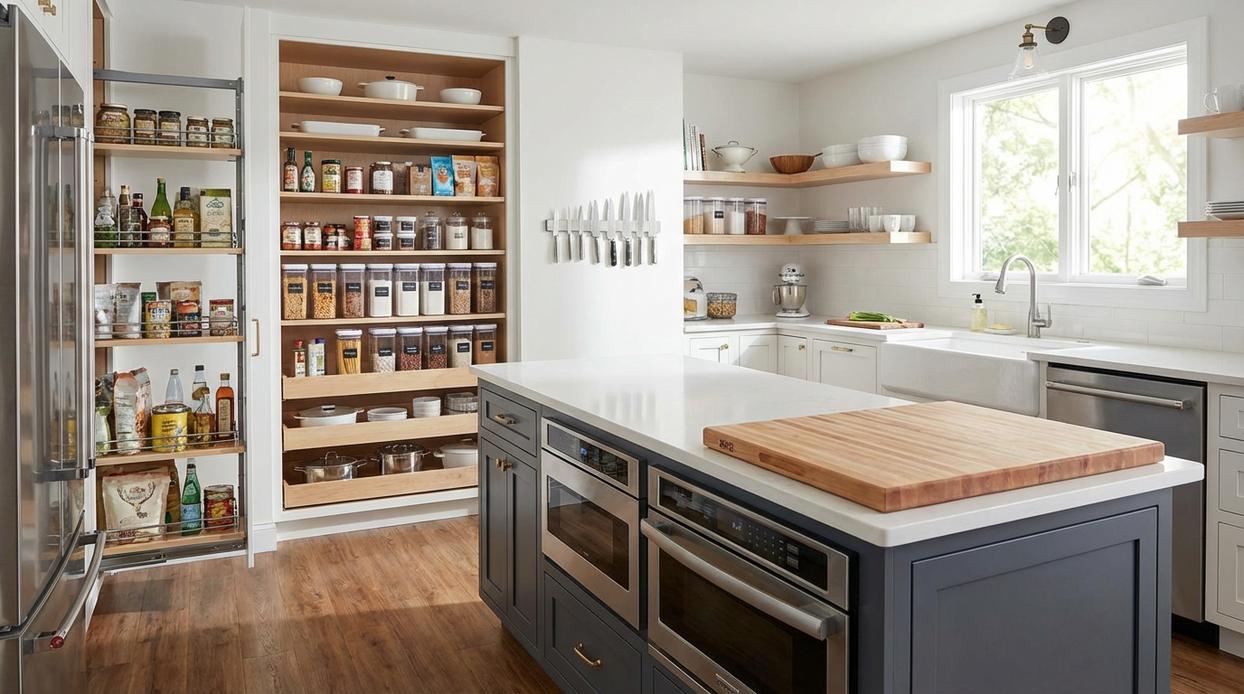
An efficient kitchen isn’t just about storage—it’s about flow. When your space is divided into purposeful zones, every chop, sizzle, and rinse feels intentional (and far less chaotic at 7 p.m. on a Tuesday).
The Prep Zone
This is where the rhythm begins. The steady thud of a knife against a cutting board, the bright scent of freshly chopped herbs, the cool weight of a mixing bowl in your hands. Keep cutting boards, knives, a compost bin, and mixing bowls here so peels and scraps don’t travel across the room. Containing the mess means containing the stress. Pro tip: store a damp towel under your cutting board to prevent slipping.
The Cooking Zone
Centered around your stove and oven, this zone should feel like mission control. You’ll hear the gentle crackle of oil hitting a hot pan and smell garlic blooming in seconds. Keep oils, go-to spices, spatulas, and tongs within arm’s reach. When heat is involved, every extra step matters. Thoughtful placement is one of those underrated kitchen efficiency tips that instantly improves timing and flavor.
The Cleaning Zone
The soft rush of water, the clink of plates, the hum of the dishwasher—this area should invite action. Group your sink, dishwasher, and drying rack together. Clean as you go, and you’ll avoid the dreaded mountain of dishes staring you down after dinner (we’ve all been there).
Work Smarter: The Magic of Batching and Component Cooking
Invest a little time now to save a lot of time later. That’s the core idea behind batching—preparing ingredients in bulk so they’re ready when you need them. But here’s the twist: component cooking (prepping versatile building blocks instead of full meals) often beats traditional batch cooking.
Some argue cooking full meals ahead is more convenient. And yes, grabbing a pre-made lasagna from the fridge feels efficient. However, compare that to having flexible components: one batch of quinoa can become a salad on Monday, a stir-fry on Wednesday, and stuffed peppers on Friday. Flexibility wins (unless you truly love eating the same thing five days straight).
Consider these smart comparisons:
-
Grain Prepping: Bulk vs. Daily Cooking
Cook rice or quinoa once; use it all week. Versus cooking nightly and washing the pot every time. The time savings compound quickly. -
Sauce Base: One Flavor vs. Many
A lemon-tahini dressing can top salads, drizzle over bowls, or coat roasted vegetables. One base, multiple outcomes. -
Aromatic Freezing: Fresh Chop vs. Ready Cubes
Freeze sautéed mirepoix (a mix of onion, carrot, celery) in ice cube trays. Drop into soups for instant depth.
Admittedly, batching requires planning. Yet once your setup aligns with kitchen efficiency tips—and perhaps even a quick review of how to organize your kitchen for maximum efficiency (https://falotani.net/how-to-organize-your-kitchen-for-maximum-efficiency/)—you’ll spend less time scrambling and more time creating.
Tool Optimization and Recipe Adaptation
Using the right tool for the job is a non-negotiable productivity hack. (Yes, even if you’re emotionally attached to that dull knife.) A microplane zests citrus in seconds; a box grater just makes your knuckles nervous. An immersion blender tackles soups without the “will this explode?” moment of a countertop blender. Adapt recipes to your tools instead of suffering for authenticity. If a dish calls for minced garlic and you own a press, use it proudly. A food processor can spin curry paste in moments, saving fifteen minutes of chopping and mild resentment. Keep everyday gear within arm’s reach—don’t bury your favorite skillet like forgotten treasure. These swaps are practical kitchen efficiency tips that keep cooking fast, fun, and mess-light.
Cooking feels overwhelming when every step competes for your attention. By building systems, you replace chaos with clarity. Start with mise en place (a French term meaning “everything in its place”), which means prepping and organizing ingredients before heat touches a pan. Create a dedicated Prep Zone so tools and ingredients stay within reach. Use component cooking—prepare bases like grains or roasted vegetables once, then remix them all week. These kitchen efficiency tips work because they reduce decisions and wasted motion. Pro tip: set a five-minute reset timer after dinner to restore order. Choose one change and test it tonight.
Bring More Flavor and Confidence Into Your Kitchen
You came here looking for practical ways to elevate everyday cooking—whether through smarter ingredient choices, better flavor pairings, or more streamlined preparation. Now you have a clearer understanding of how global food essentials, creative fusion ideas, and kitchen efficiency tips can transform the way you cook.
The real frustration isn’t a lack of recipes. It’s wasted time, mismatched flavors, and meals that don’t live up to your expectations. When your kitchen feels chaotic or your dishes fall flat, cooking becomes a chore instead of a creative outlet.
That changes when you apply what you’ve learned. Start experimenting with bold flavor combinations. Adapt recipes with confidence. Organize your workflow so every step feels intentional and efficient.
If you’re ready to cook smarter, waste less time, and create unforgettable meals, put these strategies into action today. Join thousands of passionate home cooks who are already transforming their kitchens with proven techniques and practical guidance. Start now and make your next dish your best one yet.