If you’re searching for a clear, practical look at modern food trends 2026, you’re likely trying to understand what’s truly shaping the way we cook, eat, and experience flavor this year. With global ingredients becoming more accessible and culinary boundaries continuing to blur, it can be difficult to separate meaningful innovation from short-lived hype.
This article explores the most impactful shifts in global food essentials, advanced flavor pairing techniques, fusion-forward dishes, and smarter kitchen efficiency strategies. We break down how these trends influence everyday cooking and how you can adapt recipes to reflect evolving tastes without overcomplicating your process.
To ensure accuracy and relevance, we’ve analyzed current culinary research, chef-driven experimentation, and emerging global dining patterns. The result is a focused, practical guide that helps you understand what’s trending—and more importantly, how to apply it in your own kitchen with confidence.
The 2026 Culinary Horizon: What’s Next on the Menu
Imagine a kitchen where AI suggests dinner, farms grow vertically downtown, and zero-waste plating is standard. Early-2020s sourdough starters have given way to smarter, greener systems. Today’s diners expect sustainability, immersive flavor, and seamless tech integration.
Here’s how to stay ahead of modern food trends 2026:
- Choose regenerative ingredients (think kelp, millet, heritage legumes).
- Invest in energy-efficient smart appliances.
- Experiment with global fusion and precision fermentation.
- Reduce waste through root-to-stem cooking.
Some argue trends are hype. Yet FAO data shows sourcing is rising. Pro tip: Start small—swap one staple this week.
Trend 1: Hyper-Localization and the Global Pantry
Farm-to-table used to feel revolutionary. Now, hyper-local is the new benchmark. Instead of simply sourcing from “nearby farms,” chefs are spotlighting micro-regional ingredients—specific heirloom bean varietals, mountain-foraged ramps, heritage grains grown in a single valley. Hyper-local means ingredients shaped by a precise ecosystem, or terroir (the environmental factors that influence a crop’s flavor), much like wine.
At first glance, some argue this focus limits creativity. Why narrow your pantry to one region? Yet the opposite is happening. These intensely local ingredients are traveling globally—folded into unexpected dishes. Imagine Appalachian pawpaws lending their custardy, mango-banana sweetness to a fragrant Southeast Asian-style curry, or a smoky regional chile paste stirred into handmade Italian pasta. The aroma hits first—bright, green, almost wild—followed by layers of earth and sweetness that feel unmistakably rooted somewhere real.
Meanwhile, home cooks can explore this shift without a restaurant budget. Visit specialized farmers’ markets and ask growers about lesser-known varietals. Try foraging (where legal and safe) for ingredients like wild garlic or serviceberries—the forest floor damp underfoot, the scent sharp and peppery in the air. Pro tip: start small by swapping one hyper-local ingredient into a familiar global recipe.
The result? Dishes taste more alive. Grains feel nuttier, herbs more aromatic, fruit more floral. In the conversation around modern food trends 2026, hyper-local cooking stands out because it delivers flavor you can actually taste, not just talk about.
Trend 2: The Rise of “Flavor Shock” Pairings
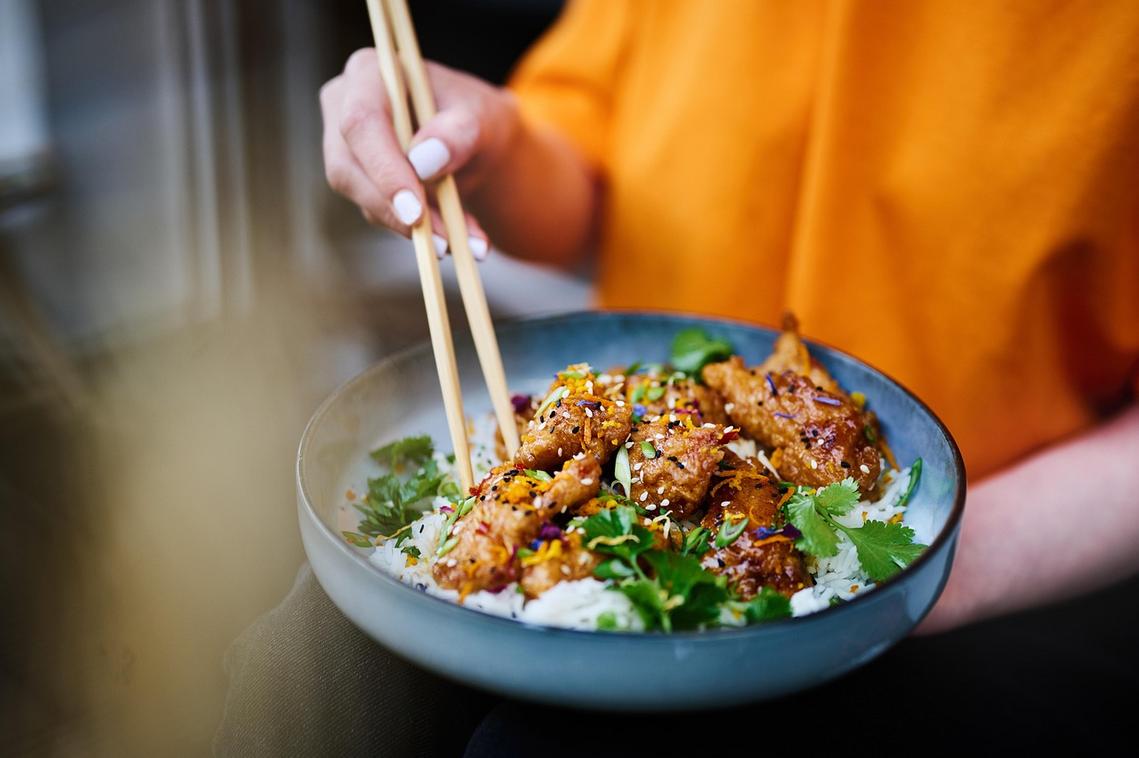
Flavor Shock is the evolution of sweet-and-salty into something bolder and more complex. Instead of caramel with sea salt, think savory desserts, fermented sweeteners, and spicy dairy. In short, it’s the deliberate addition of an unexpected element that jolts the palate—without overwhelming it.
Some critics argue these combinations are gimmicky (the culinary equivalent of a jump scare). But when executed thoughtfully, they’re rooted in food science. Flavor pairing works by balancing the five core tastes—sweet, sour, salty, bitter, and umami—so no single note dominates. Research shows that contrast heightens perception, making flavors seem more vivid (Spence, 2015, Flavour journal).
Here’s how to apply it at home:
- Add black garlic to caramel sauce for deep umami sweetness.
- Spoon chili crisp over vanilla ice cream for heat and crunch.
- Build savory yogurt bowls with olive oil, herbs, and a drizzle of honey.
Pro tip: Start with one “shock” element per dish. Too many, and the flavors compete instead of harmonize.
This approach defines modern food trends 2026 because it empowers cooks to reinvent classics. A basic brownie becomes unforgettable with miso. Tomato soup transforms with a splash of balsamic. It’s not about shock for shock’s sake—it’s strategic contrast.
Want to spot these ideas early? Learn how to track the culinary pulse of your local food scene: how to track the culinary pulse of your local food scene.
Trend 3: The AI-Assisted Kitchen and Smart Efficiency
Smart kitchens in 2026 go far beyond touchscreens on refrigerators. The real shift is adaptive intelligence—AI systems that analyze what you already have and turn it into practical meals. An AI-powered recipe generator can scan your pantry, note three zucchinis, half a rotisserie chicken, and wilting herbs, then suggest a stir-fry, a grain bowl, or a fusion soup based on your dietary needs and skill level.
Here’s how to use it effectively:
- Scan your pantry or upload your grocery receipt.
- Input dietary goals (high-protein, low-waste, gluten-free).
- Select your cooking time limit.
- Let the system optimize portions to use perishables first.
This trend aligns with modern food trends 2026, where efficiency and sustainability share the spotlight. Food waste—edible food that gets discarded—is a major global issue, contributing up to 8–10% of greenhouse gas emissions (UNEP). AI meal planning directly addresses that by mapping a week’s menu that uses overlapping ingredients.
Smart ovens now include moisture sensors, which detect internal humidity levels and adjust cooking times automatically. (No more dry salmon because you checked Instagram.)
Importantly, this isn’t about replacing the cook. Think of it as sous-chef software. The AI handles timing math and ingredient ratios; you refine seasoning, texture, and plating.
Picture this: you scan your pantry, receive three tailored recipes, tap one, and your oven preheats to the exact temperature. Dinner feels intentional, not improvised—and definitely not wasteful.
Trend 4: Upcycled Ingredients and Root-to-Leaf Gastronomy
Ever toss carrot tops or broccoli stems and feel that tiny stab of guilt? SAME. Upcycling—turning food scraps or byproducts into something delicious—used to be a chef’s flex at niche restaurants. Now it’s part of modern food trends 2026, and it’s landing in everyday kitchens.
Upcycling simply means repurposing edible parts we normally discard. Think:
- Vegetable peels baked into salty crisps
- Fruit cores steeped into bright, tangy vinegars
- Carrot tops blended into punchy pesto
Some skeptics argue this is just penny-pinching dressed up as sustainability. Fair. But they’re missing the flavor payoff. Potato skins crisp better than the flesh. Watermelon rind pickles add crunch you didn’t know you needed.
The real frustration? We’ve been throwing away TEXTURE and DEPTH for years. Upcycling isn’t about scraps. It’s about unlocking what was hiding in plain sight.
Last year, I burned a tray of locally grown carrots while testing a fermented chili glaze (lesson learned). That small kitchen fail showed me how modern food trends 2026 intertwine: local ingredients, bold global flavors, smart tech timers, and zero-waste habits working together. The food world can feel OVERWHELMING, like every meal needs a lab degree. But it doesn’t. The solution is curiosity—tasting, tweaking, adapting. Try one shift tonight: pair a regional vegetable with an unexpected spice, or use an app to track leftovers. Start small. Build confidence.
• CAPS
• ADAPT
• TASTE
Your palate will thank you tomorrow.
Bringing Global Flavors Into Your Kitchen with Confidence
You set out to understand how global food essentials, smarter flavor pairing, and fusion creativity can elevate your cooking—and now you have the tools to do exactly that. From rethinking pantry staples to embracing modern food trends 2026, you’re better equipped to create dishes that feel exciting, balanced, and uniquely yours.
The real challenge isn’t inspiration—it’s execution. Busy schedules, limited ingredients, and uncertainty about flavor combinations can make even the best ideas feel out of reach. But with the right techniques and a streamlined kitchen approach, you can turn everyday meals into bold, globally inspired experiences.
Now it’s time to take action. Start by experimenting with one new fusion dish this week, apply a flavor pairing principle you learned, and optimize one part of your kitchen workflow. If you’re ready to consistently create standout meals without the guesswork, explore our proven guides and recipe systems—trusted by thousands of home cooks looking to cook smarter, not harder. Dive in today and transform the way you cook.
 Founder & Culinary Visionary
Zyvaris Dolthane has opinions about kitchen efficiency tips. Informed ones, backed by real experience — but opinions nonetheless, and they doesn't try to disguise them as neutral observation. They thinks a lot of what gets written about Kitchen Efficiency Tips, Flavor Pairing Techniques, Recipe Adaptation Ideas is either too cautious to be useful or too confident to be credible, and they's work tends to sit deliberately in the space between those two failure modes.
Reading Zyvaris's pieces, you get the sense of someone who has thought about this stuff seriously and arrived at actual conclusions — not just collected a range of perspectives and declined to pick one. That can be uncomfortable when they lands on something you disagree with. It's also why the writing is worth engaging with. Zyvaris isn't interested in telling people what they want to hear. They is interested in telling them what they actually thinks, with enough reasoning behind it that you can push back if you want to. That kind of intellectual honesty is rarer than it should be.
What Zyvaris is best at is the moment when a familiar topic reveals something unexpected — when the conventional wisdom turns out to be slightly off, or when a small shift in framing changes everything. They finds those moments consistently, which is why they's work tends to generate real discussion rather than just passive agreement.
Founder & Culinary Visionary
Zyvaris Dolthane has opinions about kitchen efficiency tips. Informed ones, backed by real experience — but opinions nonetheless, and they doesn't try to disguise them as neutral observation. They thinks a lot of what gets written about Kitchen Efficiency Tips, Flavor Pairing Techniques, Recipe Adaptation Ideas is either too cautious to be useful or too confident to be credible, and they's work tends to sit deliberately in the space between those two failure modes.
Reading Zyvaris's pieces, you get the sense of someone who has thought about this stuff seriously and arrived at actual conclusions — not just collected a range of perspectives and declined to pick one. That can be uncomfortable when they lands on something you disagree with. It's also why the writing is worth engaging with. Zyvaris isn't interested in telling people what they want to hear. They is interested in telling them what they actually thinks, with enough reasoning behind it that you can push back if you want to. That kind of intellectual honesty is rarer than it should be.
What Zyvaris is best at is the moment when a familiar topic reveals something unexpected — when the conventional wisdom turns out to be slightly off, or when a small shift in framing changes everything. They finds those moments consistently, which is why they's work tends to generate real discussion rather than just passive agreement.